OxyProbe®
ModelD630

D630 (25mm Sartorius) Dissolved Oxygen Sensor

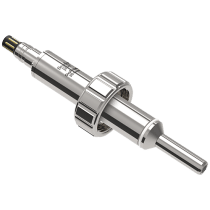
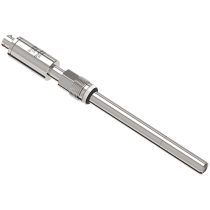
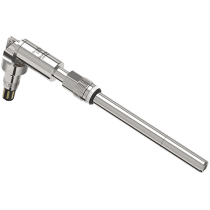
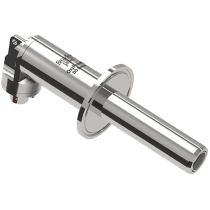
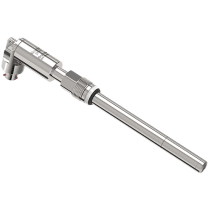
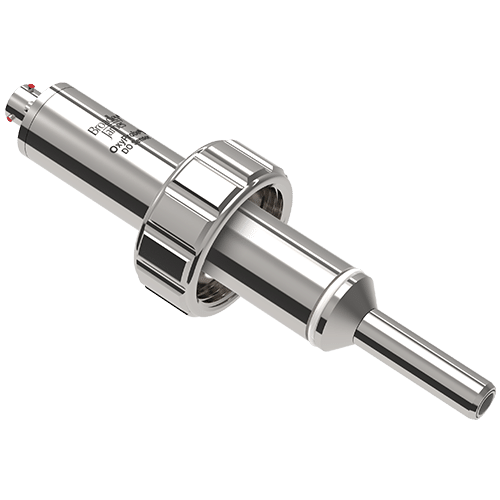
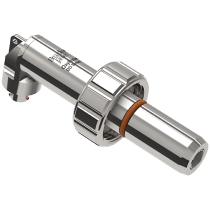
The D630 (25mm Sartorius) Dissolved Oxygen Sensor is designed specifically for use in the ports of Sartorius fermentation vessels which are longer and have a slightly different internal design. In order to seal properly, the o-ring on these sensors has been moved closer to the tip of the sensor. Also available as D635 with right-angled connector.

Ordering Information

Looking for a quote or to discuss your needs?

Our global team are on hand to help

Get a Quote

You can also review the documentation for technical details and purchasing information.

This Broadley-James D630 (25mm Sartorius) Dissolved Oxygen Sensor is designed for use with sartorius ports which are slightly longer than the standard length and have a different internal design. As such they need slightly different sensors, hence the D630 with straight connector and D635 with right-angled connector. In both of these sensors the o-ring has been moved closer to the tip in order to create a better seal. It is also available in both formats with VarioPin connectors.

The sensor fits directly into the vessel, eliminating the need for a housing, reducing contamination risks. Few accessories are required. The modular design allows quick replacement of any part, making it easy to maintain and repair the sensor. OxyProbe dissolved oxygen sensors carry a 1-Year Warranty.

D630 (25mm Sartorius) Dissolved Oxygen Sensor Specification

  • 316L Stainless Steel
  • Serialised for traceability
  • RA32 finish with electropolish on wetted parts
  • External EPDM o-ring
  • Secured retainer ring
Membrane Kits

Broadley-James offer a range of membrane kits to suit all our dissolved oxygen sensors. These include everything required to replace the membrane cartridge and internal o-rings. All kits include:

  • QC Certificate
  • Material Cert

The following membrane kits are suitable for use with the D630 (25mm Sartorius) Dissolved Oxygen Sensor:

Membrane Kit Example Image Kit Contents
Single Cartridge Kit for OxyProbe II

Part No. MK29-01

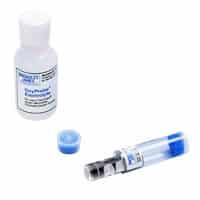
OxyProbe II DO sensor single membrane kit One 25 ml bottle of electrolyteOne membrane cartridge

One set of internal o-rings

Four Cartridge Kit for OxyProbe II

Part No. MK29-04

OxyProbe II DO sensor 4 membrane kit One 25 ml bottle of electrolyteFour membrane cartridges

Four sets of internal o-rings

16 Piece Cartridge Kit for OxyProbe II

Part No. MS29-16

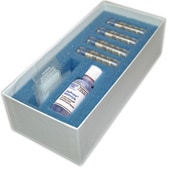
 OxyProbe II DO sensor 16 membrane pack 16 membrane cartridges in one easy-to-store box.Internal o-rings and electrolyte must be ordered separately.

Compatible Cables

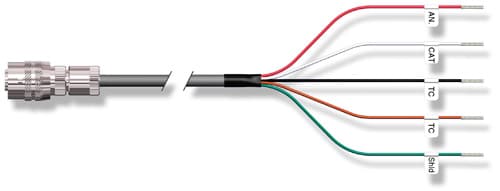
The D630 DO Sensor uses a D4 connector. This industry standard connector was the first, and is still, the best choice for DO sensors. We recommend the following cables for use with the D630 (25mm Sartorius) Dissolved Oxygen sensor:

Cable Type Sensor connector & Device Connector Device Terminal
D4 plug to Lemo 6 lemo6-d lemo6
DO Cable D4 to Crimped Ferrules crimp-d terminal-block

How to choose a sensor

  1. Confirm the vessel has a 25 mm Sartorius port.
  2. Determine how far the sensor should extend into the vessel. For most process media, the minimum length is optimal. However, if the media is viscous and tends to coat the inner wall of the vessel, a longer length may provide better performance.
  3. Decide whether a right angle connector is preferred over a straight connector.
  4. Choose cable length and connector. All D.O. sensors require cable and connector assemblies.

It is important to maintain the sensors by inspecting and calibrating them regularly. The membrane cartridge should be checked and refilled prior to every use.

D630 (25mm Sartorius) Dissolved Oxygen Sensor Straight Connector

Model  Sensor Length D9 Part Number Variopin Part Number
D630 100mm D630-B100-PT-D9 D630-B100-PT-VP

The internal seals of an Oxyprobe are all mechanical seals using o-rings. There are no adhesives to leak or fail in process, making this a more rugged and reliable sensor. Replacing the cathode is also much easier and faster since there is no sealant to clean from the threads. No sealant also makes the job of replacing the cathode much faster and cleaner.