
SG300
Series
Single-Use Irradiated pH Sensor and Bellows Insertion Assembly with Aseptic Connector
CALIBRATED
IRRADIATED
READY-TO-USE
- Saves Time, Reduces Risk
- Calibration Tag with Offset and Span Instrument Settings
- All Wetted Surfaces USP Class VI, BSE/TSE/ADI Free
- Available with Kleenpak®
and Aseptiquik® Connectors - See Product Pages below for Additional Details and Ordering Information
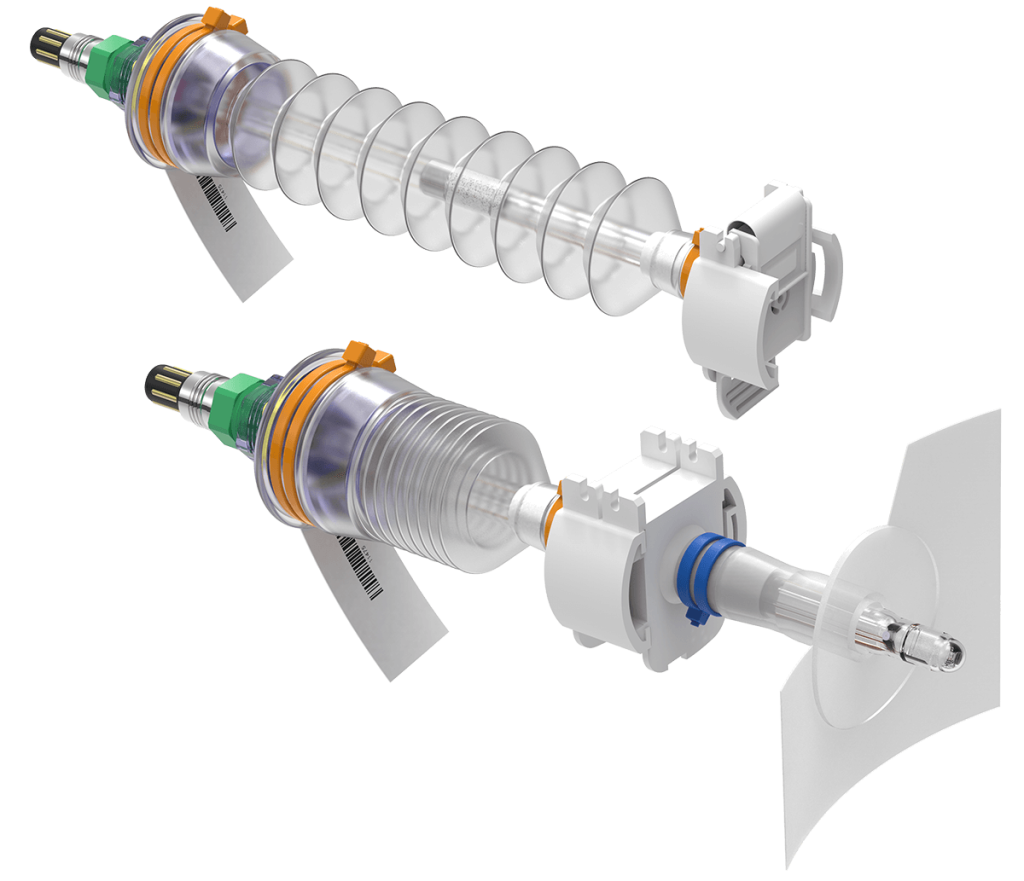
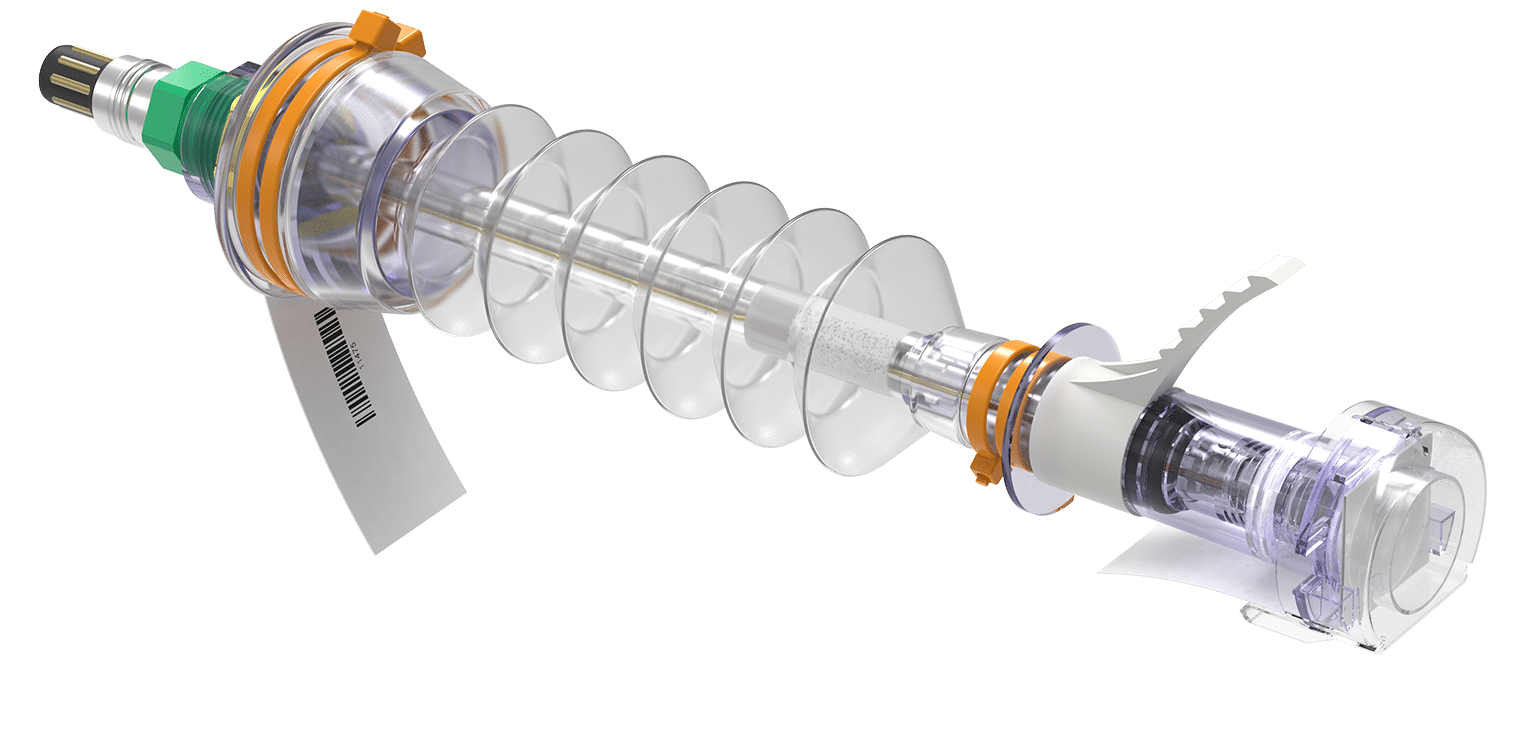
Model SG310
Gamma Irradiated pH Sensor and Bellows Insertion Assembly
with Kleenpak® Connector
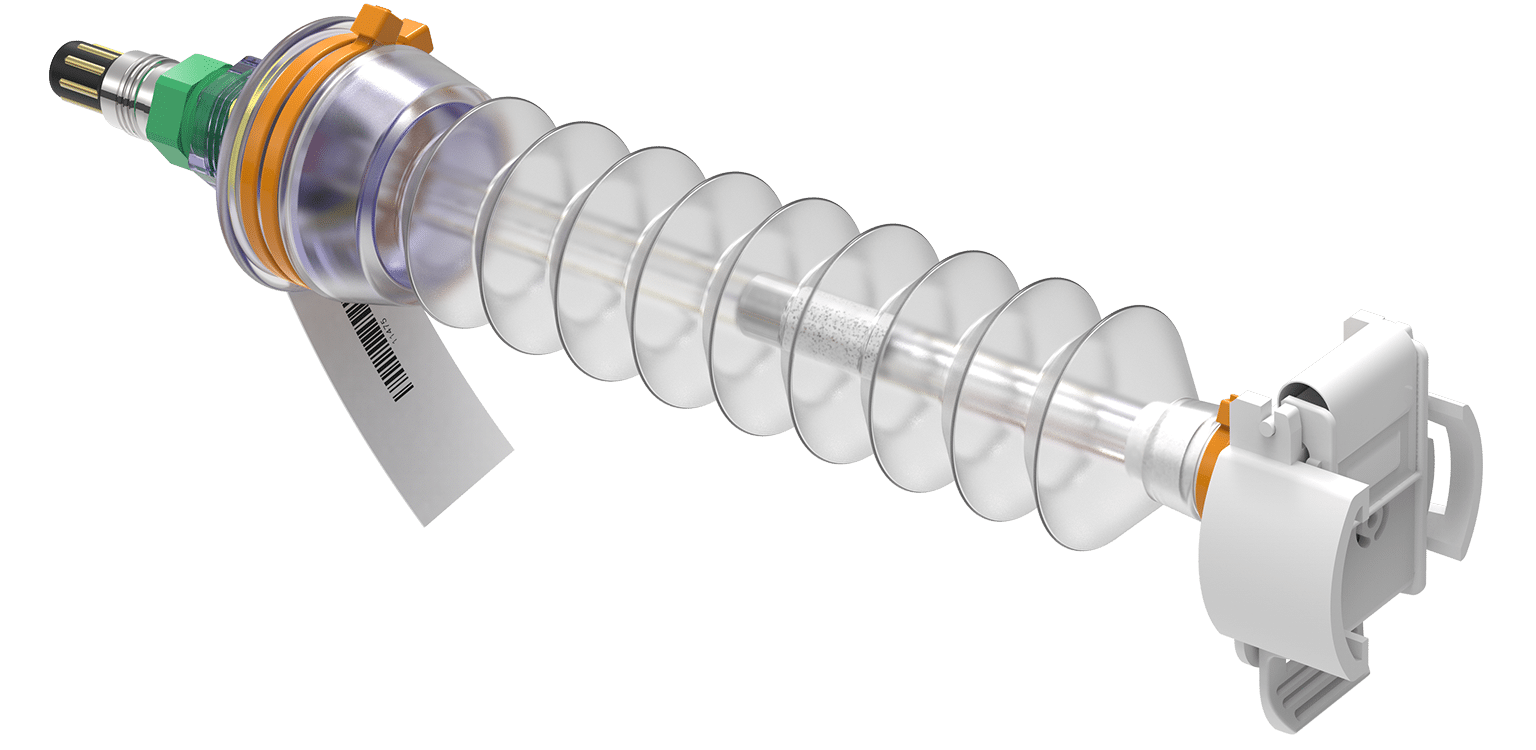
Model SG320
Gamma Irradiated pH Sensor and Bellows Insertion Assembly
with Aseptiquik® Connector
Why do I see moisture inside the bellows of my sensor insertion assembly?
Glass pH sensors have a porous ceramic junction that allows the reference electrolyte (a KCl solution) to contact the measured solution. During extended dry storage, the reference electrolyte may slowly leak from the junction by design, forming a visible drop of liquid inside the bellows.
-
This electrolyte is non-cytotoxic (data available on request) and diffuses very slowly into the process fluid under normal conditions, as with any glass pH sensor.
-
The presence of a small amount of liquid in the bellows is normal and does not indicate any damage to the sensor or create any additional exposure of the process to new materials.
Why is the pH sensor stored dry – I thought this was typically not recommended for glass pH sensors?
Glass pH sensors have a glass membrane that requires hydration to function properly. Therefore, the typical recommendation is to store pH sensors immersed in an aqueous buffer solution to ensure they are ready for use. Broadley-James SingleSense® pH sensors, however, overcome the need for continuous hydration by using a special glass formulation that can rehydrate quickly without affecting sensitivity, enabling a long dry shelf-life.
Why choose a single-use, gamma irradiated, pH sensor assembly over a pre-installed built-in single-use pH sensor?
- Improved Supply Chain Logistics: Preinstalled sensors can lead to longer deliver times from BPC providers. If the BPC design is more generic, delivers are faster.
- Flexibility: Sensors can be added to BPC as needed and in the quantity needed
- Redundacy: If a backup sensor is needed, the Model SG300 series pH sensor assembly can be installed in minutes into a spare ½ inch port.
Why choose a single-use, gamma irradiated, pH sensor assembly over an autoclaved pH sensor assembly?
- Efficiency: Saves the time, training, equipment, and record keeping required for autoclaving sensors
- Ease of use: Ready-to-Use out of the box. Installs in minutes
- Security: Gamma irradiated. Less risk of less-than-perfect autoclave procedure. No 24 hour limit-of-use as necessary with autoclaved sensors
- Reduced Risk: Gamma irradiation is less stressful on the sensor than the extreme heat of autoclaving