
he Redox sensors are designed for the measurement of the Oxidation Reduction Potential (ORP) of an aqueous process medium or wastewater. The sensor is used in conjunction with a pH meter or other electroanalytical instrumentation that can be set to read millivolts.
The Redox probe is a combination sensor with a reference half-cell and Platinum band measurement half-cell built into one body.
The Broadley James FermProbe Redox electrode range fits all suitable FermProbe housings and with standard FermProbe cables. The range is also compatible with pH transmitters that have a millivolt display mode, such as the MXD70 Series.
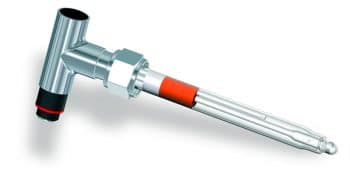
F-915 Redox FermProbe with T-Pull Cap
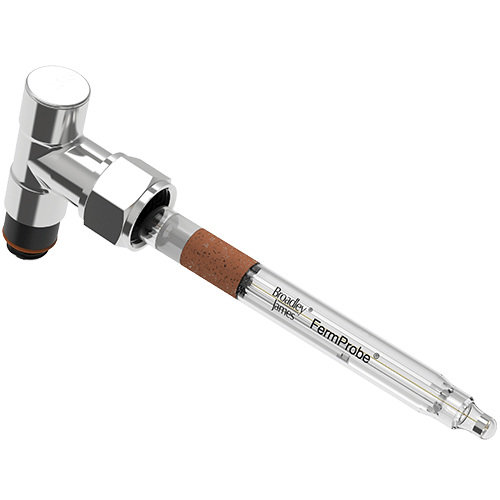
The F-915 Redox FermProbe features a T-Pull Cap. The T-Pull handle eases installation and removal of the electrode from the housing as the electrode can be easily removed from the housing without being rotated or twisting the cable. Redox sensors are most commonly used to maintain anaerobic conditions in a culture media.
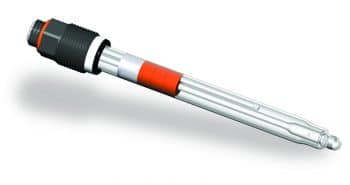
F-935 Redox FermProbe with S8 Metric Cap
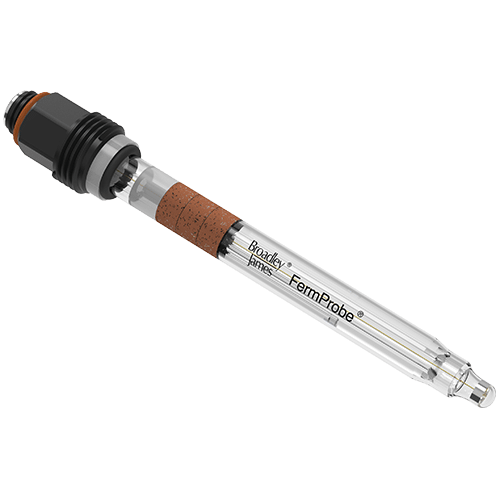
The F-935 Redox FermProbe features a standard S8 metric cap for use when the cable connector is black and has an S8 connector. Redox sensors are most commonly used to maintain anaerobic conditions in a culture media.
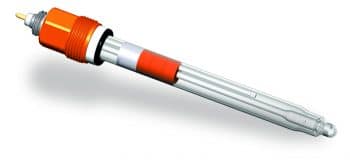
F-995 Redox FermProbe with K9 Metric Cap
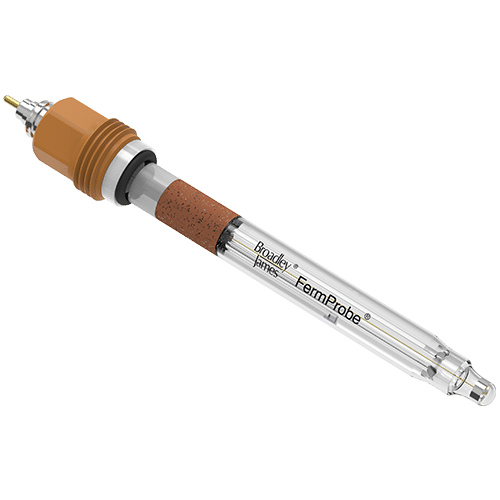
The F-995 Redox FermProbe features a K9 metric cap for use when the cable connector is red or orange and has a K9 connector. Redox sensors are most commonly used to maintain anaerobic conditions in a culture media.
For further reading about Redox sensors, here are the most common FAQs
The terms are interchangeable in meaning: Redox = Oxidation-Reduction Potential (ORP). The term Redox is more commonly used for bioprocess applications in Europe and the U.S. The term ORP is more commonly used for industrial chemical process applications in the U.S.
The redox potential of a media is related to the overall availability of electrons in the media, specifically the ratio of positive and negative ions in the solution. Note that redox measurements vary significantly with changing pH.
The metabolic activity of microorganisms depends on many factors, including the redox potential of the culture environment. Measuring the redox potential allows the vessel operator to monitor the addition of reducing agents while ensuring that the potential is in the proper range for initiation of growth. It is also important to monitor the redox potential just before inoculation.
Anaerobic fermentation
Redox sensors are most commonly used to maintain anaerobic conditions in a culture media. They can be used to measure trace amounts (<1 ppm) of dissolved oxygen, at levels that are too low for D.O. sensors.
Downstream processing
Sometimes used in steps performed downstream of the fermentation process, redox sensors can monitor changes in concentration or the absence or presence of specific chemicals. Monitoring the redox potential is an effective way of tracking chemical conversions in the process.
Protein folding
The close regulation of redox potential is crucial to allow efficient formation of disulfide bonds, which facilitate folding and the stability of the folded protein. Overly oxidizing conditions can result in misfolding due to the formation of incorrect bonds.
Metabolic pathways
Measuring the redox potential is an effective way to determine its influence on the metabolic pathways of microorganisms. This is useful for substrate utilization or the production of specific metabolites